
Storytelling
Story selections should be suitable for young audiences and chosen with the student’s personality, vocal and physical range, and school or team standards in mind. Children’s books are commonly used, as well as stories pulled from themed collections, though only one story may be performed.
This event is ideal for students who are animated, outgoing, and confident performers. Successful Storytelling competitors tend to have high energy, strong audience engagement, and a genuine love for entertaining others through narrative.
Compete
- Interpretation Textbook
- How to Get Started in Interpretation
- Source Material for Interpretation Events
- National Tournament Script Database
- National Tournament Script List Archive
- How to Pick a Topic & Piece
- How to Cut a Script
- Character Checklist
- Finding the Honest Voice of the Character
- How to Find Your Comedic Voice
- How to Build Character and Environment
- How to Create an Environment in Interpretation
- Storytelling Starter Kit
- The Art of Storytelling
Judge
What I love about storytelling is it lets a competitor be goofy. Not just funny but outlandishly goofy. There’s seldom a moment where you have to worry if something ‘makes sense.’ Most of the stories used in competition have plot lines that suspend reality in the first place. So, if I have a script with a talking iguana and I want to make him Austrailian, it works. I love how crazy it can get.
Is your program new to the NSDA?
Welcome!
Instructions
Welcome Back!
Instructions
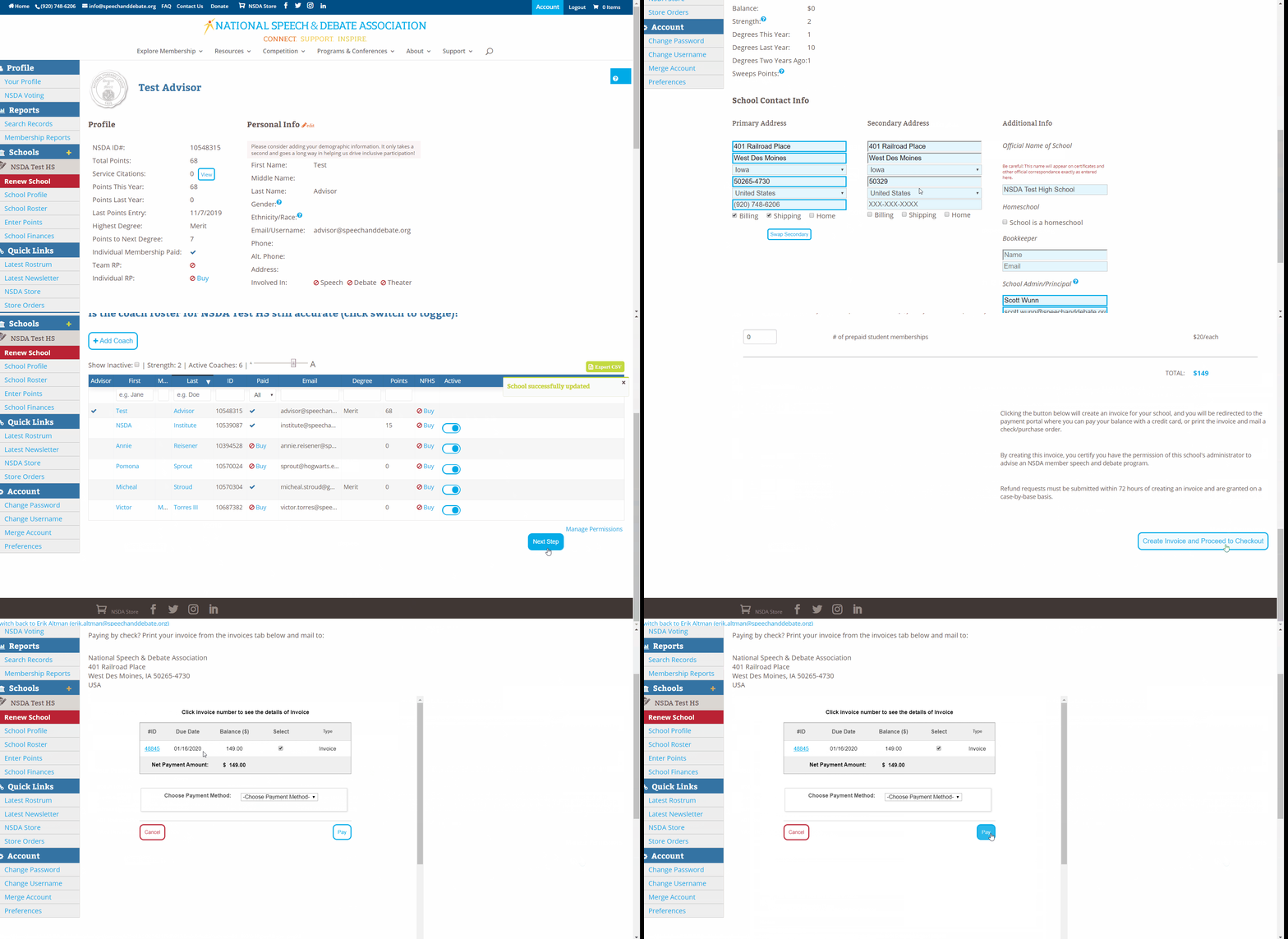
- Program advisors can visit www.speechanddebate.org and click Member Login in the top right corner of the page. Use your username and password to log in to your account. Once you’ve logged in, click “Account” in the upper right corner, which will take you to your profile page. Please click “Renew School”, in red, from the left menu and follow the prompts at the top of the page to renew your school.
- High school membership is $149, with an option to upgrade to the all-school team Resource Package for an additional $199. Each individual high school student membership is a one-time $20 fee.
- Middle school membership is $75, with an option to upgrade to the all-school team Resource Package for an additional $199. Each individual middle school student membership is a one-time $10 fee.
- To finalize the renewal, follow the prompts on the page to review the following:
Step 1. Confirm information on the school profile page. Once confirmed/updated, click the “Next Step” button.
Step 2. Confirm the coaches listed. Once confirmed/updated, click the “Next Step” button.
Step 3. Create the invoice. The annual dues are automatically selected. You can use the toggle to select other options such as coach memberships, student memberships, insurance, and the Resource Package. The prices for each item are listed on the right side of your screen, and a running total is at the bottom in blue. When done, “Create Invoice and Proceed to Checkout”.
The system allows you to “Pay Now”, with a credit card or you can email the invoice to yourself or print out the pdf.
Need a Visual? Click here to watch our brief tutorial!
(The GIF will loop continuously; there is no audio.)
Storytelling
STO • High School Supplemental Event • Middle School Main Event
Storytelling (STO) is a five-minute event (with a 30-second grace period) in which students perform a published story as if presenting to a group of young children. While some tournaments may assign a specific theme—such as heroism, fairy tales, or mysteries—the National Tournament does not require a theme, allowing students to choose any age-appropriate story that fits the format.
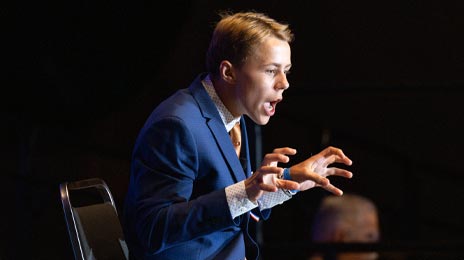
The goal of Storytelling is to captivate the audience through animated delivery, expressive movement, and a clear narrative. Students may use a chair during their performance and may choose the chair’s original position before beginning. The chair is not considered a prop as long as all four legs remain stationary on the ground throughout the performance and the competitor does not kneel or stand on it. While students may perform seated, most make full use of the available stage space to enhance their storytelling.